How Fast Can You Get Restrooms Out After a Disaster in Saint Charles?
Speed depends on how many units you need and where the site sits relative to our yard. A single delivery of standard porta potty rental units usually rolls out the same day a shelter or command post calls it in. Larger jobs, like a multi-unit setup for a Red Cross shelter or a county staging area, take a bit more lead time because we're matching unit count to expected population under OSHA 1926.51(c), which sets ratios by worker or occupant count. Saint Charles sits close enough to St. Peters, 6.9 miles west, and Maryland Heights, 9.4 miles southeast, that we can stage extra units from either direction if a storm knocks out several sites at once. For a flooded neighborhood or a multi-block power outage, we often recommend a mix: portable toilet rental units for general use, an ADA accessible porta potty for anyone with mobility needs, and a handwashing station rental nearby, since running water is usually the first thing to go. ADA Standards section 213.2 requires at least one accessible unit in any cluster, and never fewer than 5 percent of the total. If the disaster also took out a lift station or septic system, we can send a pump truck the same trip, since septic pumping service and toilet delivery run out of the same dispatch.
What Happens to Sanitation When a Septic System or Sewer Line Fails?
A failed septic tank or sewer line during flooding turns into a health hazard fast, and that's usually when we get the emergency call. If a tank backs up, we run emergency septic service to pump it out and get holding tank rental units in place while the system dries out or gets repaired. A typical residential tank holds around 1,000 gallons and normally gets pumped every 3 to 5 years, but flooding or storm surge can force an emergency pump-out far ahead of that schedule. We also see this on commercial sites: if a restaurant's grease interceptor floods or backs up, grease trap pumping becomes urgent, since interceptors are serviced once fats, oils, grease and solids reach 25 percent of the liquid depth. Handwashing matters just as much as toilets here. Under 29 CFR 1910.141(d)(2), washing stations need soap and towels or a hand-drying device, not just sanitizer, and we stock portable sink rental units built to that standard. When cleanup crews are dealing with contaminated debris, storm-damaged coatings, or treated wood, 1926.51(f)(1) also applies, since that section covers washing after exposure to paints, coatings or other harmful contaminants during the cleanup itself.
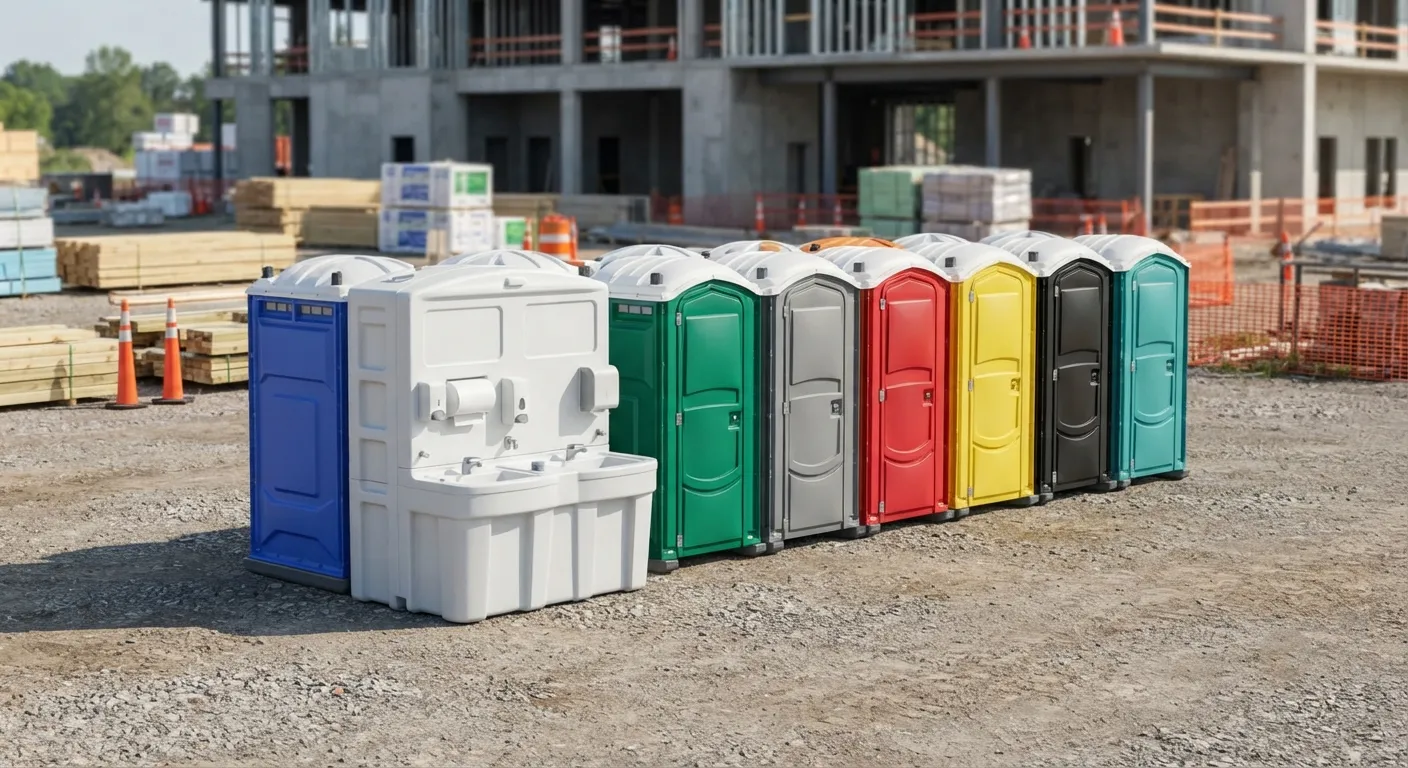
Where Do Relief Units Get Placed on a Damaged Site?
Placement depends on what's still standing and how crews and residents move through the site. A standard unit measures about 44 by 48 inches on the ground and stands roughly 92 inches tall, so it fits into tight staging areas without much site prep. We follow the same clearance logic used on construction jobs: a clear accessible route needs a minimum of 36 inches under ADA Standards section 403.5.1, and any accessible unit needs a 60 inch turning circle per section 304.3.1. If debris removal is part of the recovery, we coordinate delivery timing with roll-off dumpster rental drop-offs, since a roll-off truck needs about 60 feet of straight clearance behind it to set the container down. Sites that are still active work zones, with downed trees, damaged structures or exposed wiring, often need temporary fence rental around the restroom cluster to keep foot traffic controlled, and a light tower rental if crews are working past dark with no power restored. For a longer recovery, some sites also need a mobile office trailer rental or storage container rental to hold equipment and supplies on site instead of hauling them back and forth. We've handled this kind of layered response across Saint Charles and out toward Florissant, 13.9 miles east, and Chesterfield, 17.1 miles south, when regional storms hit more than one town at once.
| unit | duration | typical price |
|---|---|---|
| standard | day | $150 |
| standard | week | $200 |
| ada | day | $230 |
| septic | day | $250 |
| delivery_fee | day | $150 |
How many restrooms do we need for a shelter or relief site?
It depends on headcount, not square footage. OSHA 1926.51(c) sets the baseline: one toilet for 20 people or fewer, scaling up from there. For agricultural relief sites with hand-labor crews, OSHA 1928.110 calls for one facility per 20 workers within a quarter mile walk.
Can you deliver on short notice during an active emergency?
Yes, and it's the most common call we get during a storm event. Standard units and holding tanks are our fastest deployment. Larger setups, like an 8 stall restroom trailer, take more lead time to route and set level.
Do disaster sites need ADA-compliant units too?
Yes. ADA Standards section 213.2 requires at least one accessible unit per cluster, even in a temporary relief setup. We also follow section 404.2.3 for door width and section 405.2 for any ramp we add, capped at a 1:12 slope.
What if our septic system floods during the disaster?
Call for septic tank pumping cost guidance and we'll dispatch a pump truck same-day where possible. Flooding can force a pump-out years ahead of the normal 3 to 5 year cycle, and a backed-up tank is a health risk that shouldn't wait.
Is emergency service priced differently than a normal rental?
Emergency and weekend-notice work often carries a premium over a standard weekly rate, reflecting rush dispatch and after-hours routing. Ask us directly for porta potty rental cost specifics tied to your situation and timeline.
Next step
Get a delivery date
Tell us the address, the dates and the headcount. We size the order and confirm the route.