
What do OSHA rules require for farm labor sanitation?
If you hire hand-labor workers, the field sanitation rule that applies is different from a construction site rule. OSHA 1928.110 covers agricultural field sanitation and calls for potable water, toilets and handwashing at one facility per 20 employees, and that facility has to sit within a quarter mile walk of wherever the crew is working. That is a tighter placement rule than most people expect, and it means a single unit parked at the barn does not cover a crew working the back forty. Saint Charles Porta Pros lays out units along the field edge in blocks so the quarter-mile line holds no matter where the harvest moves. This differs from OSHA 1926.51(c), which governs construction crews and sets ratios by headcount instead of walking distance, so do not mix the two rules up if your operation runs both a field crew and a building project on the same property. Compare that construction ratio on the OSHA portable toilet requirements page if you run mixed crews. For general placement thinking beyond the labor rule, the porta potty placement guide covers ground stability and access. A standard porta potty rental satisfies the field sanitation baseline for most row-crop and livestock operations around Saint Charles.
How many units does a farm operation actually need?
Count workers, not acres. A 15-person crew working two fields a half mile apart needs two placements, not one, because of the quarter-mile walking rule under 1928.110. Add a handwashing unit at each cluster too, since a portable toilet alone does not meet the standard. Saint Charles farms running seasonal harvest crews, from spring planting through fall corn and soybean harvest, tend to rotate units between fields as work moves, and that rotation is cheaper on a weekly rate than booking single days over and over. Check the how many porta potties do I need guide for a fuller breakdown by crew size. Pair each toilet cluster with a handwashing station or a portable sink rental; 29 CFR 1910.141(d)(2) requires soap and towels or a hand-drying device at any washing facility, and a bottle of hand sanitizer sitting on a fence post does not satisfy that. Roadside produce stands and agritourism operations near Saint Charles that draw public foot traffic during pumpkin season or corn maze season should also look at ADA accessible porta potty units, since ADA Standards section 213.2 requires at least one accessible unit in any cluster open to the public, even a small one.
Where should units be placed on farm ground?
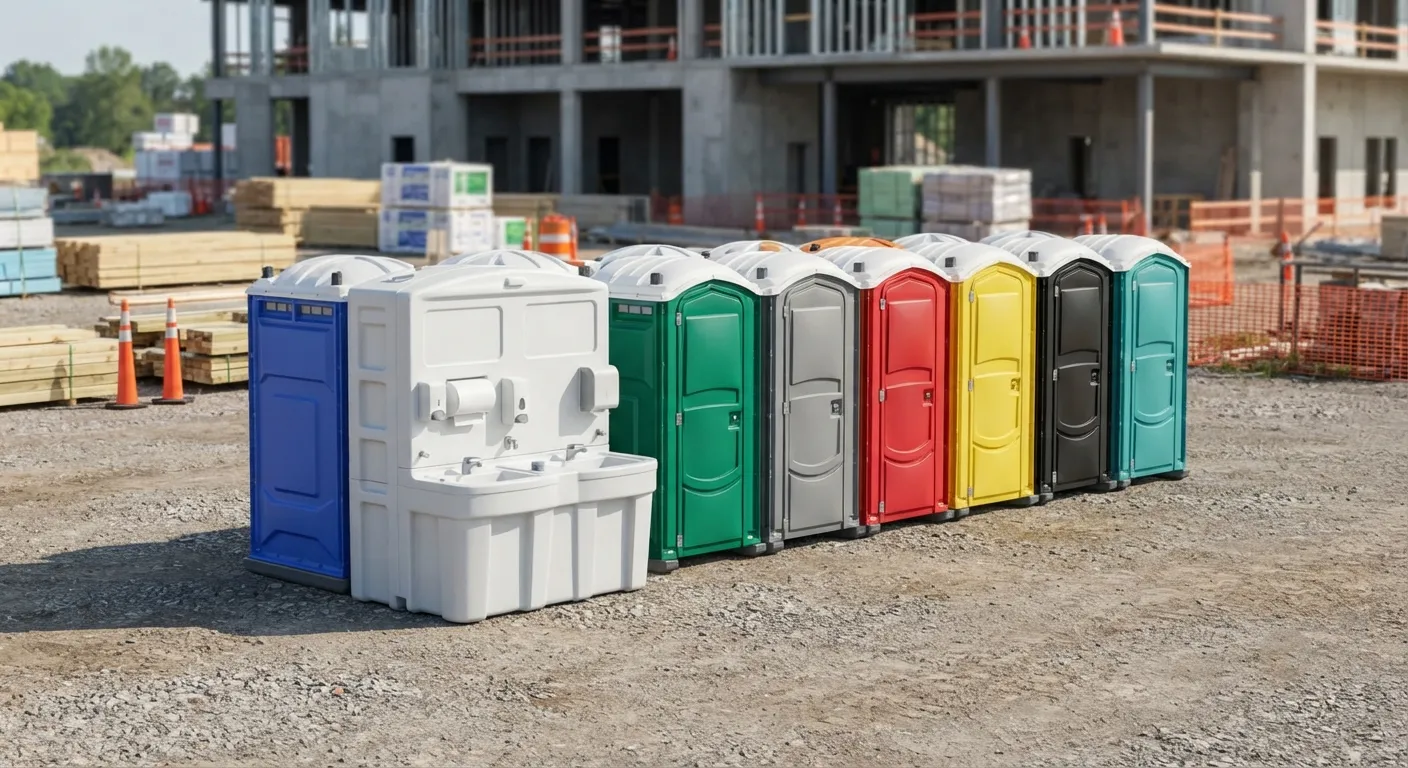
Firm, level ground near the work zone, with truck access for service. That is the short version. ADA Standards section 302.1 calls for stable, firm, slip-resistant surfacing, which matters more on farm ground than on a paved lot, since spring mud and gravel access roads are the norm rather than the exception around Saint Charles. A roll-off delivery or a service truck needs about 60 feet of straight clearance to back in, so field edges near a gate or lane work better than a spot boxed in by fence rows. If your operation also needs debris removed after a building project or barn teardown, a roll-off dumpster rental can sit on the same access road, and dumpster permit requirements is worth a read before anything gets placed near a public road. Farms running a wash station or processing shed with grease from equipment cleaning should also look at grease trap pumping, since a grease interceptor needs service once fats, oils and grease reach 25 percent of the liquid depth. For farms on well and septic rather than city sewer, septic pumping service and the how often to pump a septic tank guide cover the 3 to 5 year interval typical for a residential-sized tank.
| unit | duration | typical price |
|---|---|---|
| standard | day | 150 |
| standard | week | 200 |
| standard | month | 200 |
| ada | week | 185 |
Saint Charles operations booking a full season should compare the day rate against the monthly porta potty rental page and the porta potty rental cost overview before committing to a term. Farms closer to St. Peters, about 6.9 miles west, or Maryland Heights, 9.4 miles southeast, fall in the same service radius and get the same delivery terms.
How much does a farm restroom rental cost per month?
A standard unit runs 125 to 325 dollars a month depending on service frequency and unit count, which is the range most seasonal farm crews land in. Multi-unit field setups price per unit, so a three-field rotation costs three times a single placement. See porta potty rental per day if you only need coverage for a short harvest push.
Do we need a handwashing station separate from the toilet?
Yes. A toilet unit alone does not meet 29 CFR 1910.141(d)(2), which requires soap and a towel or hand-drying device at any washing facility serving your crew. Pair every toilet cluster with a handwashing station rental rather than relying on sanitizer alone.
Can we move units between fields during harvest?
Yes, and most farms do. Saint Charles Porta Pros relocates units as work shifts between fields, keeping each crew within the quarter-mile walk that OSHA 1928.110 requires. Schedule moves ahead of the crew, not after, so nobody works a field without coverage.
What if we have both field labor and a construction crew on site?
Run both rules. Field hands fall under OSHA 1928.110, while any construction crew, like a barn build, falls under OSHA 1926.51(c). Check construction site services for the building-side ratio and keep the two counts separate on your sanitation plan.
Is a septic tank enough for a farmhouse and field crew combined?
Usually not during peak season. A typical residential septic tank is pumped every 3 to 5 years under normal household use, but a large seasonal crew adds volume fast. Talk to septic tank cleaning about interim pumping or add portable units for the crew instead.
Next step
Get a delivery date
Tell us the address, the dates and the headcount. We size the order and confirm the route.