How Do Porta Potties Work?
Under the seat sits a holding tank, usually 60 to 70 gallons, filled a few inches deep with a blue deodorizing chemical that breaks down waste and knocks back smell. A vent stack runs up the back wall to the roof, pulling odor up and out instead of into the stall. That is the whole system: no plumbing, no power cord, nothing to hook up. A standard porta potty rental in Saint Charles sits on its own molded base, about 44 by 48 inches on the ground and roughly 92 inches tall, so it fits in a driveway strip, a job site corner, or a fenced lot without needing a pad poured first. Service techs pump the tank, refill the chemical, and restock paper on a route schedule, and ANSI/PSAI Z4.3 sets the baseline at once a week for up to 10 users across a 40 hour week. Busier sites need more frequent stops, which is a scheduling question worth asking about directly on the porta potty rental in Saint Charles page or by requesting a quote. If you are still working out how many stalls a crew or a wedding actually needs, the how many porta potties do I need guide walks through it by headcount.
How Do Flushable Porta Potties Work?
A deluxe flushable porta potty adds a foot pump or hand pump that pulls fresh water from a small onboard tank and flushes it through the bowl into the holding tank below, same idea as a low-flow toilet but self-contained. There is a sink built into most deluxe units too, fed by that same fresh water tank, so guests get an actual rinse instead of just sanitizer. These run more than a standard unit because of the extra tank and pump hardware, and they show up most often at weddings, corporate events, and film shoots, which the luxury restroom trailer and event restroom rental pages cover in more depth. For anyone comparing options before a Saint Charles event, the deluxe flushable porta potty page has the full spec rundown, and pricing context lives on the porta potty rental cost page.
How Does a Portable Sink Work?
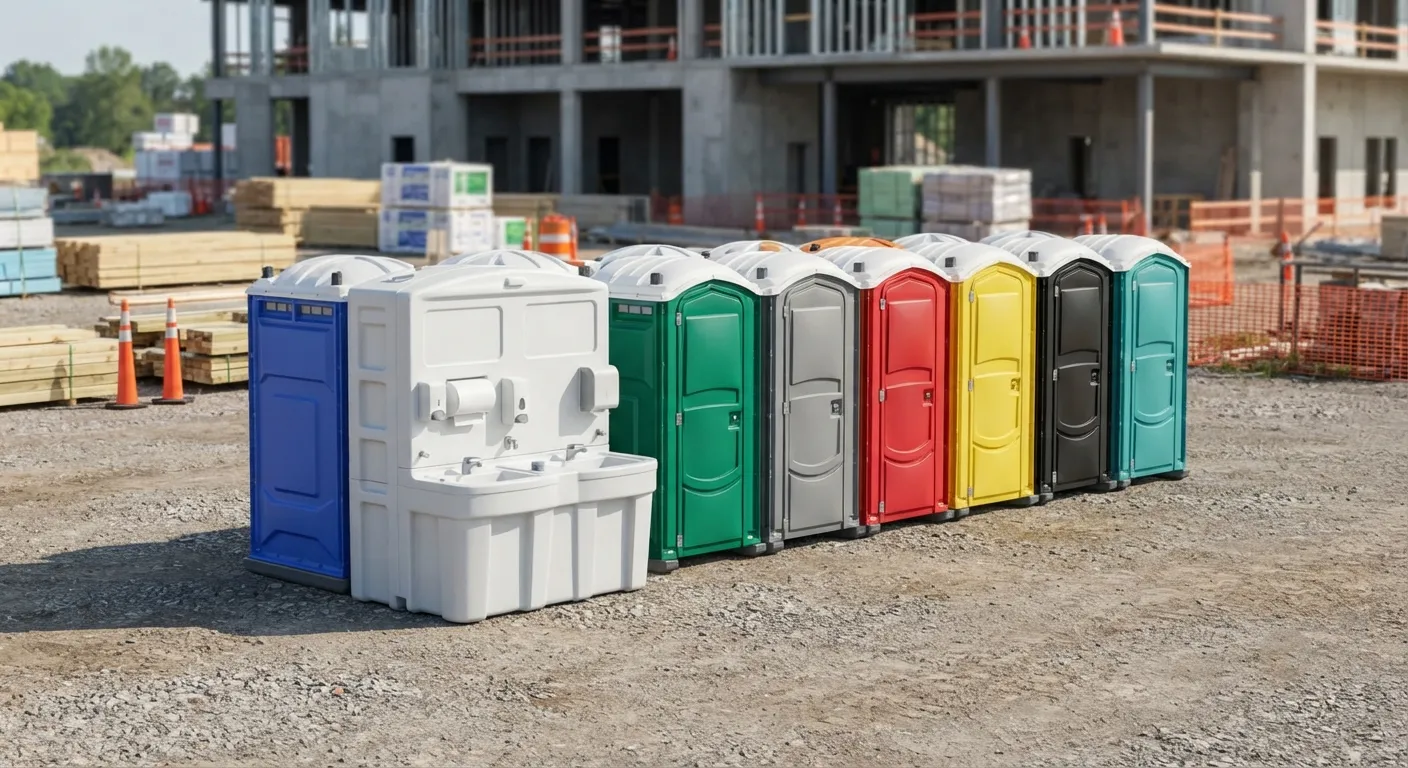
A portable sink is its own small system: a fresh water tank feeds the faucet by foot pump or battery pump, greywater drains into a separate tank underneath, and soap sits in a built-in dispenser. Nothing connects to a building. This matters for compliance, since 29 CFR 1910.141(d)(2) requires soap and towels or a hand-drying device at washing facilities, and hand sanitizer alone does not satisfy that standard. Construction crews doing paint, coatings, herbicide, or insecticide work specifically trigger OSHA 1926.51(f)(1), which calls for washing facilities beyond a basic toilet setup. A handwashing station rental or a portable sink rental covers that gap cheaply next to a bank of toilets, and the handwashing requirements page breaks down when a jobsite needs one versus a sanitizer stand from the hand sanitizer station rental page.
How Do Camping Porta Potties Work?
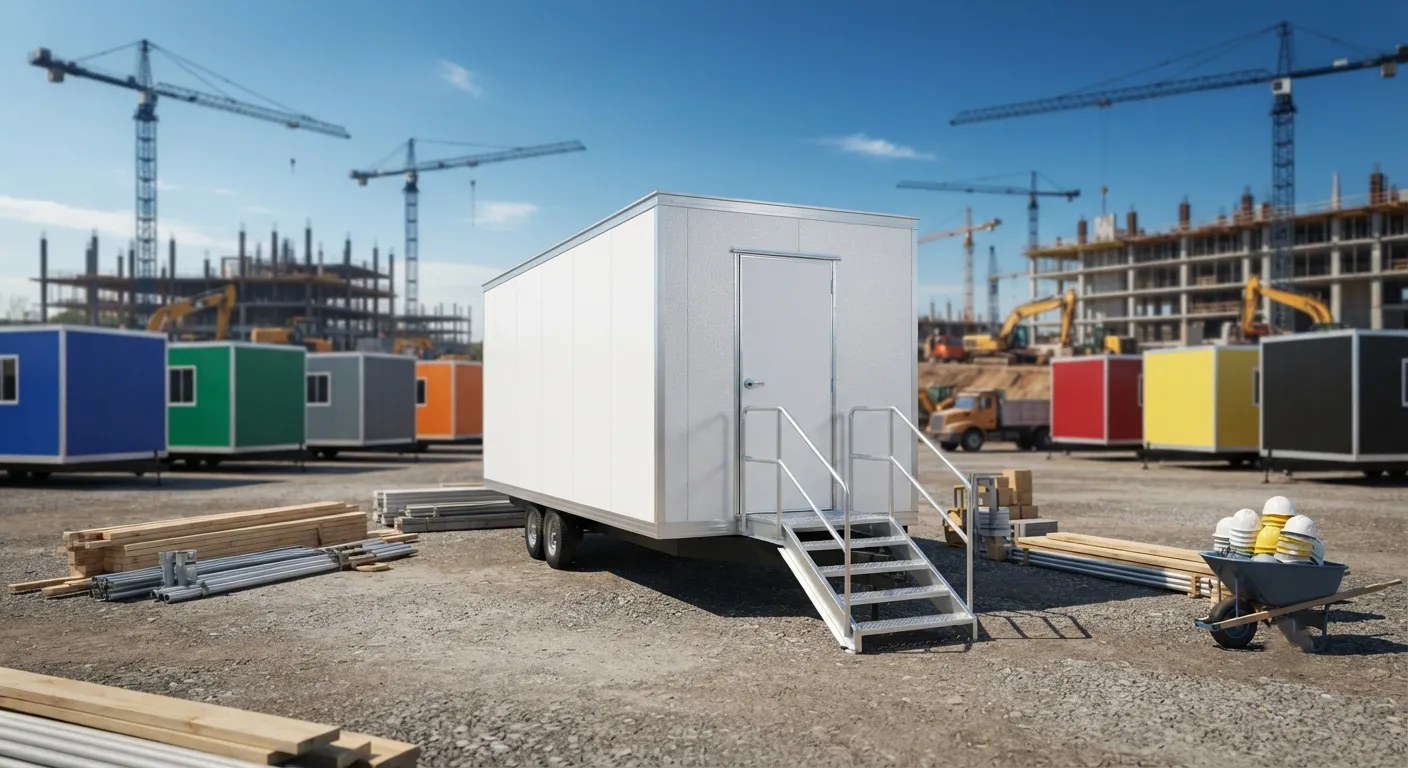
Camping and remote-site units work the same way as a jobsite standard: sealed tank, vent stack, chemical treatment, no hookups needed. The difference is mostly placement and service frequency, since campsites and farm operations often sit further from a paved access road. Saint Charles Porta Pros still needs firm, level ground to set a unit safely, per ADA Standards 302.1 on stable surfaces, which applies even on grass or gravel. For agricultural operations with hand-labor crews, OSHA 1928.110 sets a field sanitation standard of one facility per 20 employees within a quarter mile walk, which is worth knowing if you are staffing a farm crew outside city limits. The camping porta potty and farm and agricultural restrooms pages go into placement specifics, and construction site services covers the jobsite side, including what a construction worker running to a porta potty between shifts actually needs nearby: a unit close enough to reach on a break, not tucked behind a stack of material.
Saint Charles crews working near St. Peters, about 6.9 miles west, or Maryland Heights, 9.4 miles southeast, get the same delivery and service standard, since routes run daily through that stretch. OSHA 1926.51(c) sets the toilet count itself: one unit for 20 workers or fewer, then one toilet seat and one urinal per 40 workers as headcount climbs past that. Anyone standing up a larger site should check the OSHA portable toilet requirements page before ordering.
| unit | day | week | month |
|---|---|---|---|
| standard | $100-$350 | $130-$500 | $125-$325 |
| deluxe | $85-$1200 | $150-$290 | - |
| ada | $200-$400 | $240-$500 | - |
How often do porta potties get cleaned?
Service intervals depend on headcount and usage, but ANSI/PSAI Z4.3 sets a baseline of once weekly for up to 10 users over a 40 hour week. High-traffic events or larger crews need more frequent stops. The how often are porta potties cleaned page has the full breakdown by site type.
Do porta potties smell?
A working vent stack and regular chemical treatment keep odor down, but a unit skipped past its service date will smell. Placement matters too, since direct sun speeds up breakdown. The do porta potties smell page covers what actually controls odor.
What chemicals go in a porta potty?
A blue deodorizing treatment sits in the holding tank, breaking down waste and masking odor between service visits. It is not the same as septic tank cleaning chemicals used in a home system, which target a much larger tank pumped every 3 to 5 years.
Can I rent an ADA accessible porta potty in Saint Charles?
Yes. ADA Standards 213.2 requires at least 5 percent of clustered single-user units to be accessible, with a minimum 60 inch turning circle inside per section 304.3.1. The ADA accessible porta potty page has specs and pricing.
How is a porta potty different from a septic tank?
A porta potty is a sealed, self-contained tank pumped on a route schedule. A home septic tank is buried, connected to plumbing, and typically pumped every 3 to 5 years. The septic pumping service page covers that separate system.
Next step
Get a delivery date
Tell us the address, the dates and the headcount. We size the order and confirm the route.